
SELECTED TALKS/ INTERVIEWS
TALKS/ LECTURES
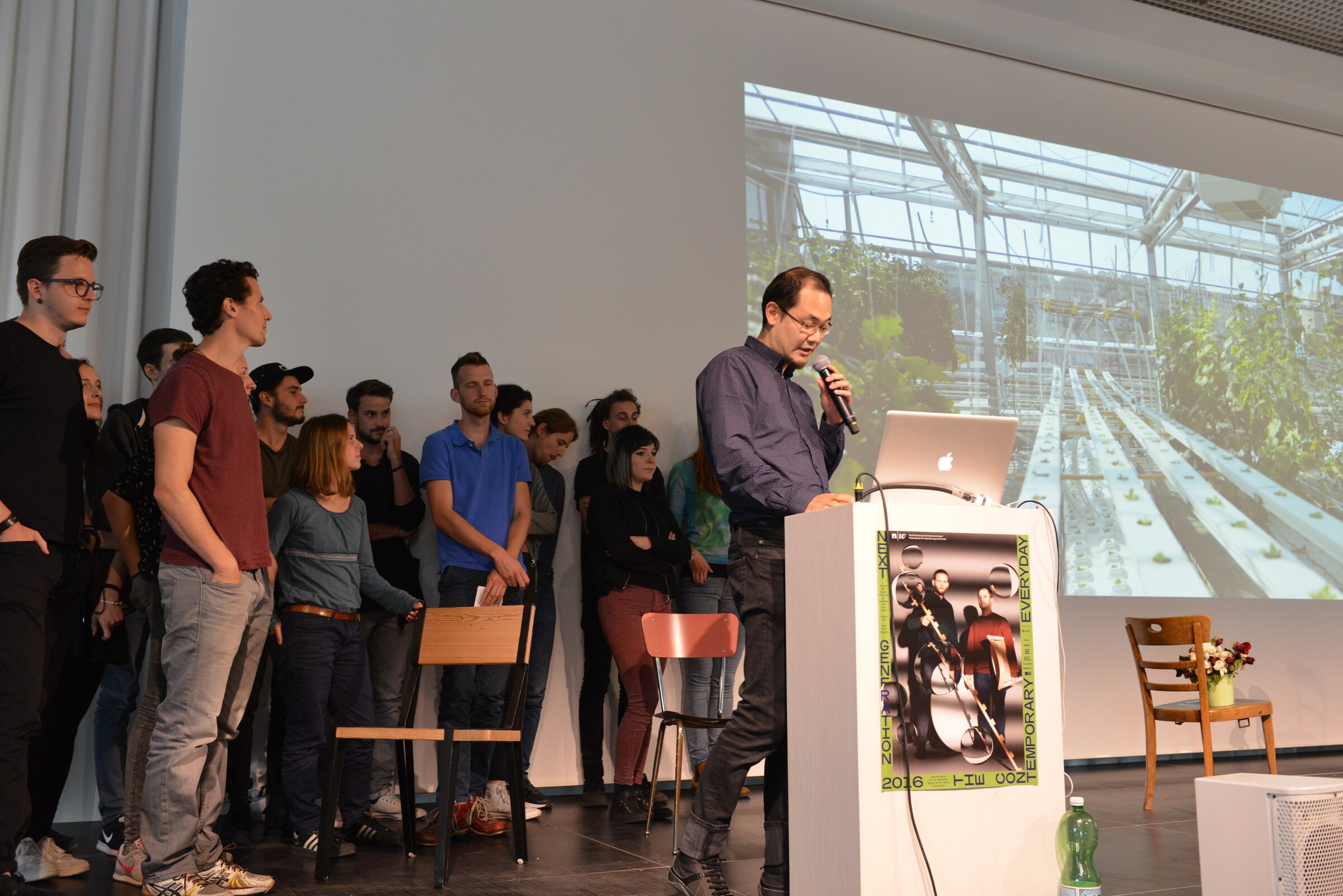
↑ Ein Gastvortrag im Rahmen des Schwerpunktthemas "Digital Societies" der Fellowperiode 2016-2020 am Collegium Helveticum zur Gast an der Zürcher Hochschule der Künste (Zhdk). Initiiert von Prof. Hannes Rickli und Dr. des. Christian Ritter. Presentation of the "School of Digitality" in German.
↑ Input for "EXPLORING EDGES – International Colloquium between the Digital Humanities, Architecture, Artistic Research, and Critical Technical Practice", July 11-14 2017 in Lausanne Switzerland. Here I basically tried to raise awareness for critical data studies and practices. A plea for historical contextualization and aesthetic experimentation with practices of data analysis and data processing/ work.
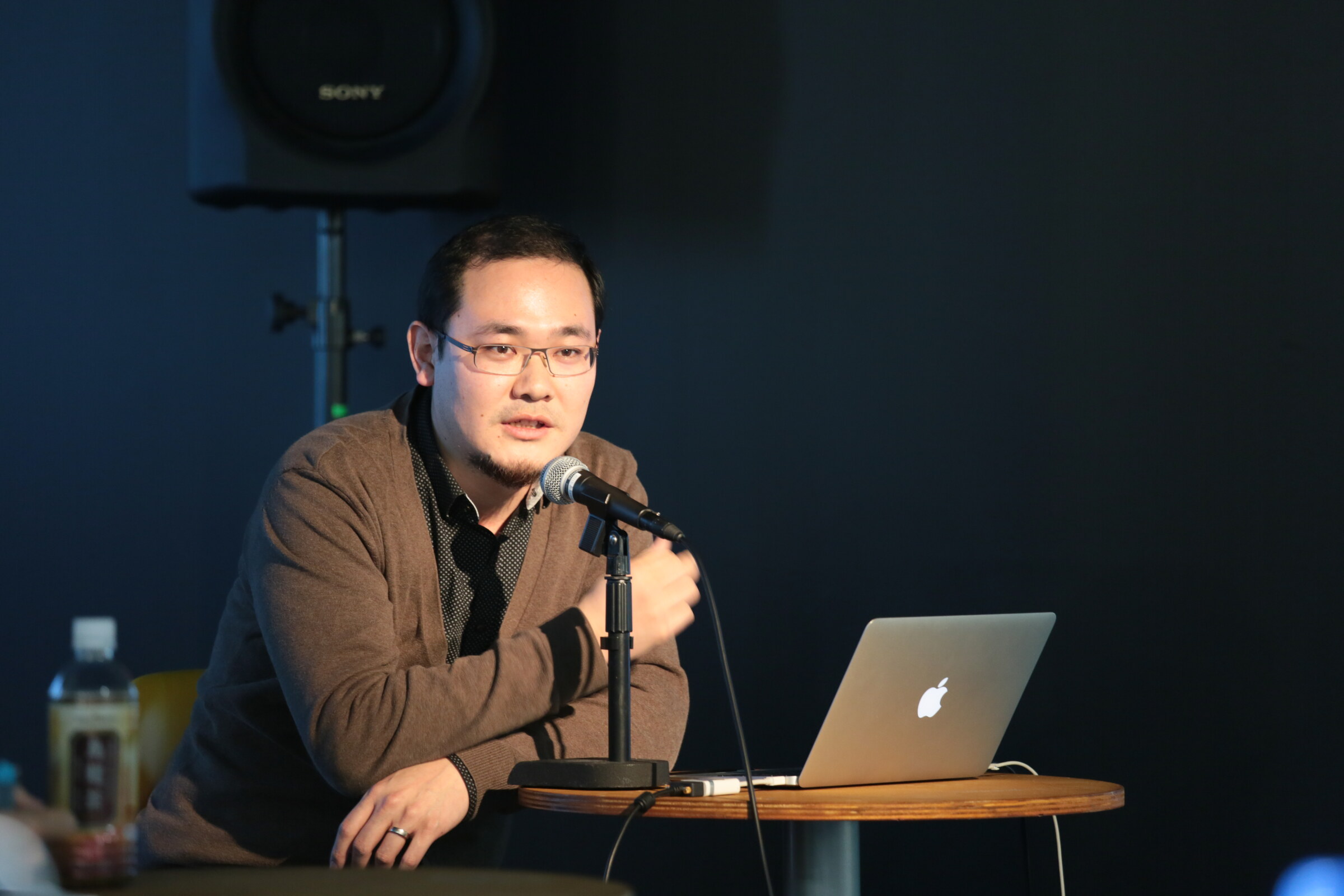
↑ "Prinzip Oszillation – der immergierte Endverbraucher" (Nov. 19 2016) a talk organized by the Berliner Festspiele. German abstract: "Immersive Erfahrungen beruhen auf medialen Technologien, die die Illusion eines perzeptiv-mentalen Eintauchens in künstliche Welten ermöglichen. Der Aktionsspielraum des/der Zuschauer*in reduziert sich dabei häufig auf einen passiven Konsum medialer Inhalte. Die mediale Maschinerie hinter der Immersion bleibt versteckt. Miyazaki zeigt einfache Wege, um sich spielerisch-ästhetisch auszuhelfen und Unsichtbares hörbar zu machen."
↑ This recorded talk (37:05 mins) gives an overview of my state of research in 2015. Starting with a late reaction of the big data hypes (2008/9) and an attempt to historize big data research I link it to my previous research. The first part is thus an easy to grasp summary of my PhD research. From 13:45 I tried to present an "archaeology of data work 1960–" based on k-means. I worked out strong links between statistics and signaling, which nowadays get more and more relevant with streaming algorithms. Data in the age of big data are closer to sound or signals, than to fiches in an archive and or entries in book. From 18:40 on I conducted an historical analysis of data visualization. And from 23:45 on, I talked more specifically about ping-echo request (the title of the talk) as an active way of exploration compared to the more passive mode of listening. Finally, from 31:40 I open up and proposed pinging as an mode of artistic pratices. Refering on Dirk Baeckers concepts of post-heroic I tried to combined it with issue of complexity, counterintuitive effects, and micro-decisions.
INTERVIEWS/PRESS
Summer 2017, Algo-rhythmics by Sam Hind
November 2015, “Behind design thinking, cybernetics and media studies: a conversation with Shintaro Miyazaki” by Julien Gremaud
2013, Mapping the electomagnetism. Detektors by Martin Howse and Shintaro Miyazaki by Alessandra Saviotti
EXCERPTS...
Julien Gremaud: We should begin with the path that brought you, as a child, from West-Berlin to the city of Basel, with your Japanese roots, which might been seen as something quite unconventional?
Shintaro Miyazaki: Oh it is very simple and nowadays many people share similar paths. My parents are both Japanese classical percussionists. During the late 1970s my dad studied and worked at the “Herbert von Karajan Academy”, which was affiliated with the Berliner Philharmoniker and my mother was a student at Hochschule der Künste Berlin when she became pregnant. I was born 1980 in Charlottenburg-Wilmersdorf Berlin. After the final year at the Academy my father was looking for jobs in different orchestras all over Germany and also in Basel, Switzerland and here he found his job as a solo-timpani player. So that is the story how they came with me as a small kid to Basel.
Julien Gremaud: Which interest brought you to media studies? Did you develop an interest for art, music, and this research field at the same time? Was it the inception of your taste for mixing fields?
Shintaro Miyazaki: As a teenager I was very eager to learn everything about how the world, nature, and technology works. I tinkered with these German Kosmos kits for electronics and chemistry, played with my microscope (it was quite popular in my circle of friends to have a microscope), had a R/C car, mixed up new fireworks, and watched my friends play Wolfenstein 3D or use CorelDraw. Electronics, but also laboratory equipment shops were still operating just in your small village close to or in Basel. I remember how fascinated I was with erlenmeyer colbs. Anyway, I have also played violin since I was five and then later at fourteen I started to play the e-guitar, I loved distortion and loud feedback effects. A friend of mine then was obsessed with disco equipment. He build up a renting agency for loudspeakers, amplifiers, spotlights, disco balls, disco scanners, fog machines etc. Beginning with about sixteen my wanna-be-radicalness dragged me towards Hermann Hesse, Thomas Mann, Nietzsche, Charles Bukowski, Sartre and my music interests turned towards classical music beyond just playing the violin. I also started to get more interested in contemporary music. After high-school I applied for a music teacher course at the Musikhochschule Basel, but my piano playing and singing skills were too low. So then I started to study musicology, new German literature, and philosophy at the University of Basel. It was normal to combine different disciplines. Media studies was soon then announced as a complete new course and I was one of the first students of this new course. My interests were first in mass communication and journalism, but after around 2001 or 2002 a new professor called Christoph Tholen started teaching. He gave lectures on McLuhan, Baudrillard, Flusser, Kittler, media art, and performance art, I immediately caught intellectual fire and since then I have been in this field. I finished studying in 2007. During an ERASMUS exchange in Berlin I met Wolfgang Ernst, who became later my PhD-advisor at Humboldt-University Berlin.
---
A more nerdy radio talk from 2012 with Martin Howse